
Do You Choose the Partner or the Wound?
On repetition compulsion, the roles we inherit, and why the map runs faster than the insight

You swore this one was different.
Different face, job, different energy in the room when they walked in.
You told yourself you’d learned. That you’d grown. That this time you were choosing from a clearer place.
But if months in you’re sitting with the same feeling in your chest, whether it is the same stomach drop. The same tightening throat. The same 3am calculations you’ve run so many times you could do them in your sleep.
You can fill in the blanks. You know what yours are.
It leads, eventually, to the same question…
What is wrong with me?
Today I want to offer you a different one.
Do you choose the partner, or do you choose the wound?
Your brain isn’t broken. It’s following a very old map.
Think about the last time you drove somewhere familiar. A route you’ve taken countless times. You arrived and barely remembered the journey.
Your brain had filed that route so well it could almost run without using much fuel.
Your nervous system does the same thing all the time. Only the stakes are higher when it comes to people.
Before you could name what love was, your brain was already mapping it.
A map of relationships.
What does closeness feel like.
What does love look like.
What do I have to do to keep someone near.
What does it mean when someone goes quiet.
That map got built from whatever was available.
The people who raised you. The ones who left. The love that came with conditions attached. The early moments of reaching for someone and what happened next. The comfort that arrived too late or not at all. The silence where reassurance should have been.
The brain doesn’t store that map as a memory you can consciously access.
It stores it as a prediction.
A background of expectation running beneath your awareness.
This is what love feels like. This is what I should expect. This is what home is.
So when you meet someone who matches that map, even partially, something in you recognises them.
Your nervous system says: yes. I know this.
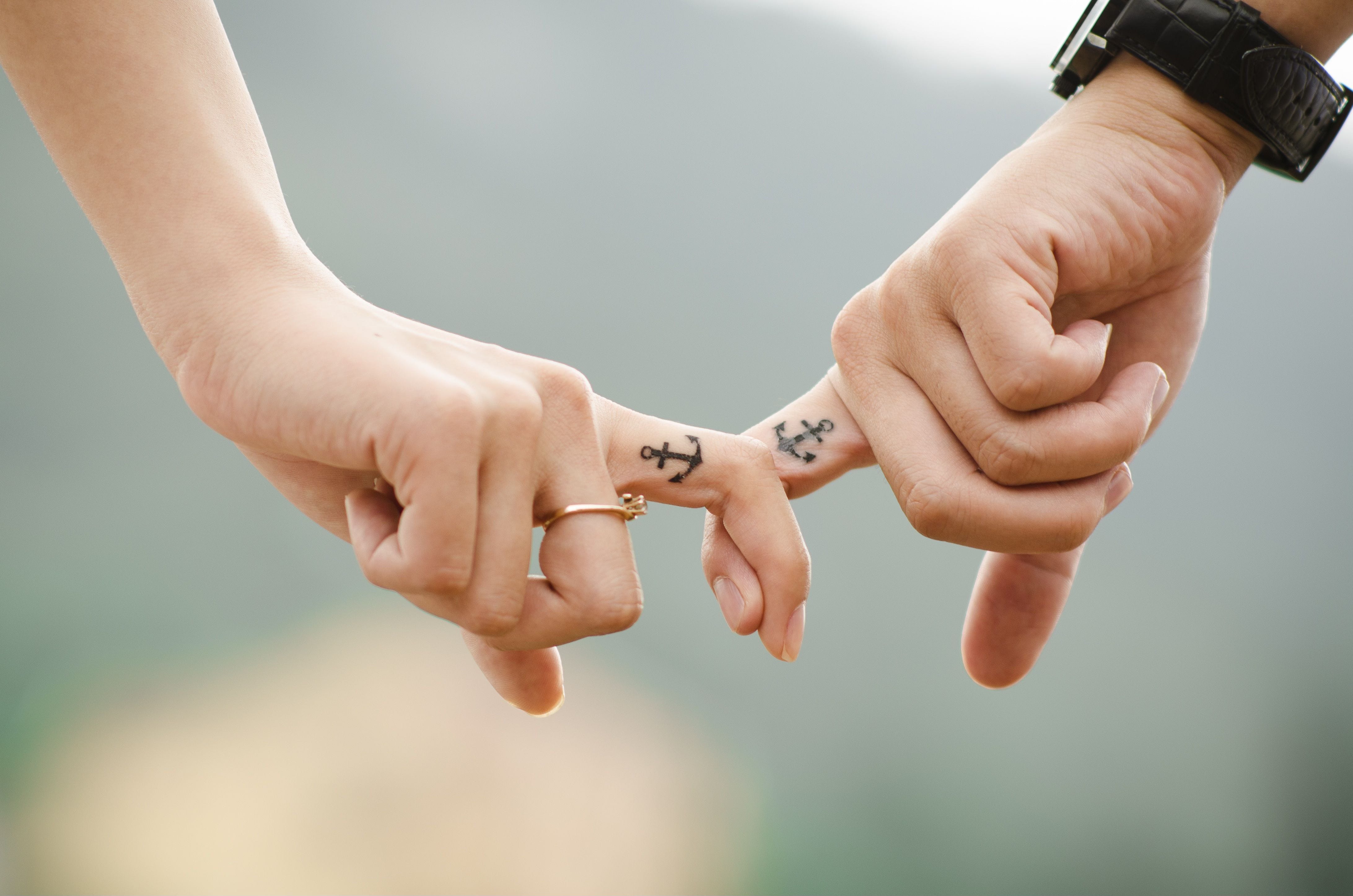
But the map doesn’t just encode a feeling. It encodes a wound.
And the wound is different for everyone.
For some it is never feeling chosen.
For others it is love that felt conditional, present one day and withdrawn the next.
For some it is having to be easy, having to be good, having to shrink so there was room for everyone else.
Or it is the specific ache of being in a room full of people and still feeling invisible.
You know what yours is. Even if you might not have words for it yet, your nervous system has been carrying it for a long time and knows it well.
The reason you keep choosing the same person isn’t only because they feel familiar.
It’s because some part of you believes that this time it will go differently.
That this person will finally see you. Choose you. Stay.
That the wound will get the ending it never got.
That is not weakness. That is hope. Ancient, exhausting, completely understandable hope.
But here is a thing. The blueprint doesn’t just encode a feeling. It encodes a role.
Not just love feels like anxiety but also what you have to be to receive love.
What you have to do to keep someone close. What the warning signs look like that tell you love is about to leave. What you do with yourself when it does.
So you are not just choosing the same feeling. You are choosing the same role.
Think about who you were in your family. If that’s hard to access right now, think about the roles you’ve seen playing out around you.
The one who kept the peace. The one who made themselves easy to love. The one who stayed small so there was room for everyone else. The one who learned that needing too much was dangerous. The one who got attention through achievement, or through crisis, or through disappearing.
One of those might have just landed somewhere in your body. That’s the one.
That role was not a choice. It was a solution.
The most effective way one’s younger self found to stay connected to the people they needed.
And it worked. Which is exactly why it’s still running.
So what I would like you to remember is that you don’t just find the same person.
You find the role you’ve always played, already waiting.
And that version loads fast.
The falling gets all the attention. I am personally far more interested in the speed at which you stop being fully yourself.
You meet someone who fits the map and the old software starts running before you have even caught up. You don’t get to decide to load it. It just starts automatically until rewritten.
It can look like this.
You are already the one who checks in more. Already reading the tone of their messages. Already braced for something to go wrong or experiencing the general sense of background anxiety you couldn’t name if someone asked. Maybe, already editing, managing, performing a version of yourself that knows how to survive interpersonal dynamics.
And it feels normal. It feels like just how you are with people you really like.
It isn’t only romantic relationships. You might notice it with a friend who has a particular kind of neediness. A boss whose approval feels strangely essential. A dynamic that shouldn’t matter as much as it does but somehow does.
The map runs wherever there is someone who matches it. But it tends to be loudest in love.
Because love is where the original blueprint was written.
And this is the part that is hardest to see. Because if the blueprint has been running long enough, it stops feeling like a pattern. It starts feeling like you.
You might have done the work and in many ways you had. But then someone who fits the map walks in and the old software starts running.
This is because the blueprint lives in implicit memory.
The kind that runs below awareness, below language, below insight. The nervous system is faster than the understanding.
That is not a failure of healing. That is just how deep the pattern goes.
The sign worth paying attention to isn’t who you choose. It’s who you become.
Think about the last person you were really drawn to.
Could you explain to your friends what you saw in them?
Not the surface things, the deeper thing.
The reason it felt like them specifically.
Most people can’t do it by being precise.
If that is you, that’s your clue. The likelihood is what you were responding to wasn’t visible but felt.
This is exactly the blueprint recognition. It doesn’t come with a reason.
It just comes with a yes.
This is not self-sabotage. It is not weakness.
It is a nervous system doing its job with a very old set of instructions.
The pattern was built for a reason. It was the most intelligent response available to you at the time. You learned what to expect, you learned how to manage it, and you survived.
The work isn’t to shame yourself out of it.
Shame doesn’t update the map. It just adds another layer to navigate…
The bitter sweet truth is that the work on the blueprint is unique and for many very strange but it gets to be yours.
It is the gradual, sometimes tedious, sometimes grief-filled process of expanding what feels familiar. And it is spending enough time in something genuinely different that different starts to feel like ground.
The process isn’t comfortable necessarily or easy. It takes a particular bravery to stay with something that doesn't yet feel like anything.
Think of it like changing the groove on a vinyl record. It takes repetition. It takes patience. The needle wants to follow the old track because that is what it knows.
But every time you catch it, every time you pause before the pattern completes, every time you choose even slightly differently, it matters. It might not feel like much in the moment.
The map is being redrawn. Slowly, quietly, one choice at a time.
If this resonated , share it with someone who needed to read it today.
And if you want to go deeper into what it actually takes to update the map, that is what the Inner Room (paid subscription) is for.
Welcome to the Safety Revolution
I am so glad you are here.
Kat
I love the cover, title and subtitle. Love it!
On that title alone, I think it depends on how aware someone is and whether they’re choosing from old wounds or from what genuinely feels right.
People talk about the mind versus the heart, and interestingly the heart has its own network of around 40,000 neurons. Not a brain that thinks independently, but heart signals can influence emotion, intuition, and how we experience connection.
So maybe the question isn’t only “Do we choose the partner or do we choose the wound?” but whether we’re choosing from awareness or from what feels familiar.
Sadly, we get same lessons until we learn 😭
Keep posting stuff like this. I wrote so much on the subject and have pods out. Love it! You’re helping so many people.
Wow, Kat, this resonates a lot with someone that used to be knee deep stuck in limerance. Getting stuck in the ideal version of someone instead of seeing them for who they really are has burned me in the past.
Still not sure if I'm ready to go back into the dating world after that, but I do think it was a valuable lesson to learn. The one thing I still need to work on is not having to change myself in order to be loved (goes back to people pleasing tendencies). Am getting better though as I get older and slowly re-train my nervous system.